
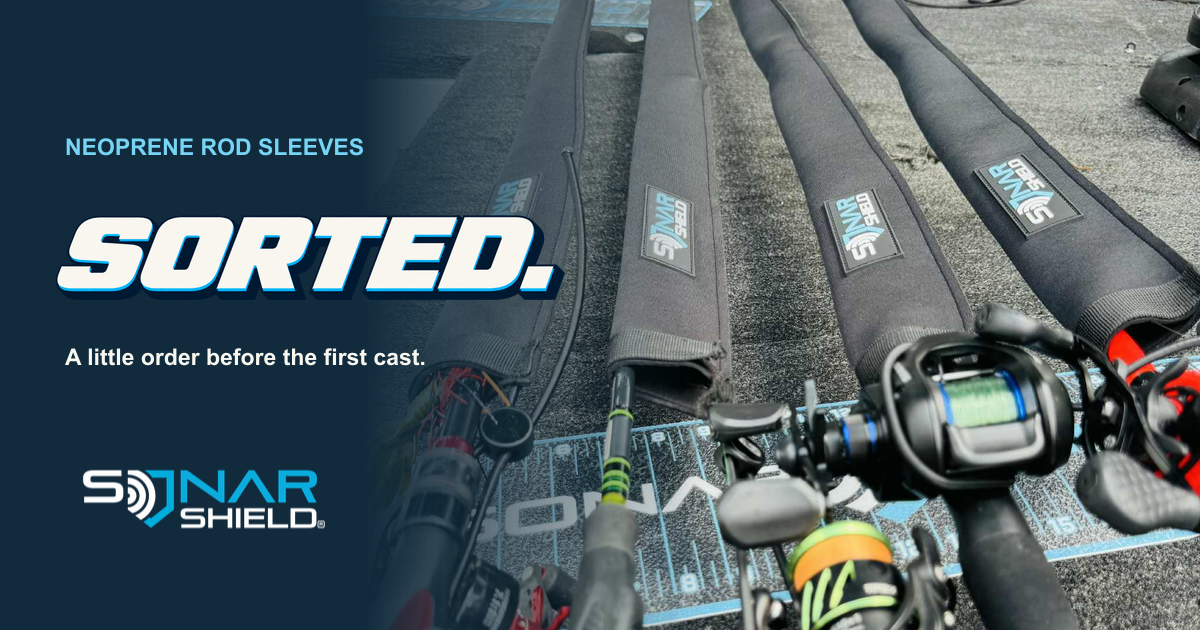
The right rod sleeve starts with the guides. A spinning outfit and a baitcasting outfit may be the same length, but they do not need the same opening. Match the sleeve to the rod before packing everything together.
Shop Sonar Shield neoprene rod sleeves →
A quick fit comparison
These specifications apply to the current Sonar Shield Neoprene Fishing Rod Sleeves listing, checked September 23, 2026.
| Choose | Rod arrangement | Sleeve dimensions |
|---|---|---|
| Spinning | Reel below the rod; larger guides | 62 inches long; 3.5-inch opening |
| Casting | Reel above the rod; lower-profile guides | 64 inches long; 2.5-inch opening |
Both versions are listed for most rods from 6 feet 10 inches to 7 feet 6 inches. “Most” matters: check your actual guide arrangement and fit rather than treating rod length alone as a guarantee.
Make the first fitting a calm one
Start where you have room to handle the entire outfit without brushing the tip against a ceiling, vehicle or neighboring rod. Account for the lure and exposed hooks before handling the sleeve. Check for rough guides or existing damage rather than covering a problem and forgetting it.
Support the rod as you fit the sleeve. If it catches, stop and identify the obstruction. Forcing a tight sleeve over an oversized guide is not a way to establish compatibility. Check that the reinforced tip area and opening sit correctly, then use the intended retention cord. A sleeve is protective storage equipment, not a lifting handle or a tie-down for the rod.
Give each outfit a parking place
Our suggested organization routine is simple: pair each sleeve with its rod, keep the outfit in a consistent place and return it there after the trip. Grouping rods by technique can help you find what you want, but keep each outfit individually accessible. Pulling one rod out should not require dragging several others with it.
Before closing a locker or loading a vehicle, trace the rod from tip to handle. Look for a tip crossing the opening, a guide bearing against another hard object or a lure caught where the sleeve cannot protect it. Use the boat or vehicle's appropriate rod-retention arrangement; the sleeve does not replace it.
After fishing: check, clean and dry
Look for grit, cuts, loose edging or wear at the tip. Sonar Shield's product care guidance calls for textile and neoprene products to dry completely. Avoid putting a wet sleeve into closed storage and assuming it will dry there. Follow the specific care instructions supplied with the product.
The neoprene is described as hook-resistant. That does not mean hook-proof or a reason to leave sharp hooks loose. The sleeves help protect rods during ordinary storage and transport; they do not make a rod immune to crushing or careless handling.
Shop Sonar Shield rod protection

Neoprene Fishing Rod Sleeves
Choose the Spinning or Casting version for your rod's guide arrangement. View current sizing, options and availability before ordering. Rod and reel are not included.
One useful habit to keep
When you reach for a rod, put its removed sleeve in a designated place. When you put that rod away, inspect and refit the matching sleeve. This keeps the routine easy to repeat even when several outfits share the deck.
How do you organize your rods—by technique, rod length or the order you expect to use them? Share the habit that makes your next trip easier.