
Emily Reed — Sonar Shield editorial pen name
A good fishing workshop can make the next step feel more approachable. The opportunity afterward is to keep that momentum going: choose one skill, give yourself time to practice and stay connected with people who make learning enjoyable.
A recent gathering at Guntersville
Bassmaster published its 2026 Toyota Owners BassmastHER Workshop at Lake Guntersville gallery on October 17. The accompanying description says women came together to learn and celebrate women in fishing. Laura Ann Butts is credited for the official gallery photography.
That documented event is the starting point for this article. We were not reporting from the workshop and are not attributing the suggestions below to individual attendees. To see the event itself, follow Bassmaster's original gallery.
Community continues beyond one date
In its third-season program review, B.A.S.S. described BassmastHER's education and community work and identified ambassadors including Kristine Fischer, Anastasia Patterson and Maggie Jo Carsello. Their involvement offers useful names for readers exploring the program through its official resources.
The Guntersville workshop is now a past event, not an open registration invitation. Check the program's current announcements for future opportunities rather than relying on an older calendar or an undated social share.
Turn enthusiasm into a manageable next trip
Our suggestion is to choose one small goal before the next outing. “Learn everything about my fish finder” is difficult to act on. “Find the range control and understand what changes when I adjust it” is specific enough to practice. The same approach works for casting, knot tying or organizing a tackle bag.
Write the goal and the starting point. If you are learning electronics, note the complete model and the relevant manual page. If you are practicing a cast, give yourself a safe area and one target. A focused session makes progress easier to recognize without turning the day into an exam.
Make it easier to ask a question
Invite a friend to share the learning goal or compare notes afterward. Ask specific questions: which control changed, what conditions were present and what did you notice? Clear observations give another angler something useful to respond to.
For an experienced angler welcoming someone new, explain a task before taking it over. Offer a chance to handle the controls or practice the skill at their own pace. Avoid assuming that someone is a beginner because of gender, or that everyone attending a community event has the same experience.
Keep a short record of progress
After the trip, save three notes: something that worked, one question still open and what you would like to try next. Share only what you are comfortable sharing. A club, workshop or fishing partner can become a place to continue those questions rather than a place where you feel expected to know everything already.
For your own equipment, Sonar Shield's accessories can be matched to the exact model you use. Keep gear preparation simple enough that it supports the time spent learning and fishing.
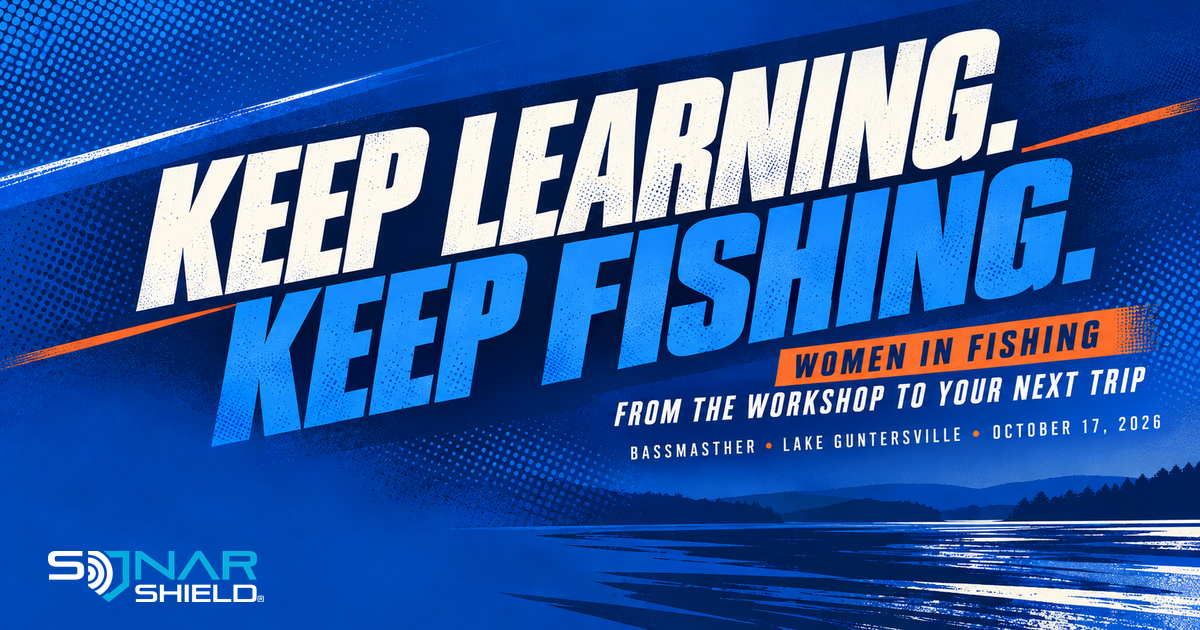
The featured artwork is original editorial typography. It does not depict a workshop attendee or imply a partnership with Bassmaster or BassmastHER. Emily Reed is an editorial pen name used by Sonar Shield, not a separate independent reviewer.
Created with AI assistance using Sonar Shield's topic direction and research from the sources cited in this article.